
Interactive Guide: Ingress Protection in Oil & Gas
Why Ingress Protection is Critical
In the oil and gas industry, instrument and electrical enclosures face some of the harshest conditions on Earth. From offshore platforms battered by corrosive salt spray to onshore desert rigs enduring fine, abrasive dust, the environment is a constant threat. Ingress Protection (IP) ratings are not just a technical specification; they are a critical line of defense. This guide provides an interactive way to understand what IP ratings mean, which environmental challenges they protect against, and how they are applied in practice to ensure safety, reliability, and operational integrity.
Prevent Downtime
Failure of a single sensor due to water or dust ingress can halt production, leading to millions in lost revenue. A high IP rating ensures instrument reliability.
Ensure Safety
In hazardous areas, an enclosure's integrity is vital to prevent an internal fault from igniting an explosive atmosphere. IP ratings maintain this integrity.
Reduce Maintenance
Properly sealed (IP66+) enclosures protect sensitive electronics from corrosion and contamination, drastically extending component life and reducing service cycles.
Interactive IP Code Explorer
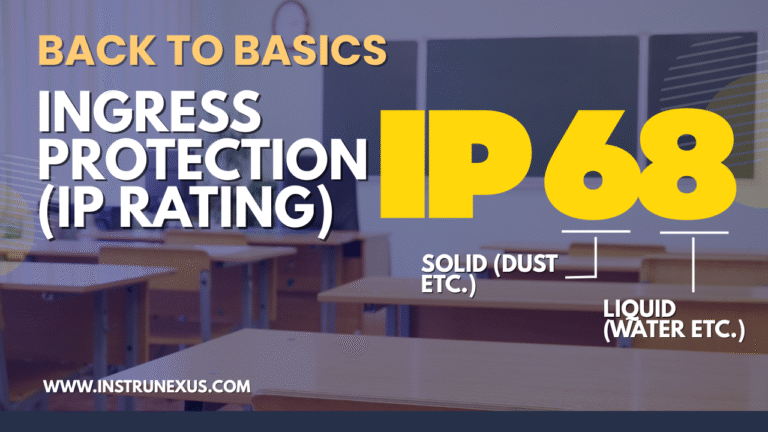
The IP Code (IEC 60529) classifies the degree of protection provided by enclosures. It consists of two digits. The first digit represents protection against solid objects (like dust), and the second digit represents protection against liquids (like water). Use the buttons below to build an IP rating and see what each digit means.
First Digit: Protection vs. Solids
Second Digit: Protection vs. Liquids
O&G Environmental Challenges vs. IP Needs
The required IP rating is dictated by the specific environmental threats an instrument will face. In Oil & Gas, these are often extreme. The chart below shows common challenges and their potential severity. Click on a bar to see how it relates to Ingress Protection.
Threat Details
Click a bar on the chart to learn more about a specific environmental challenge and the IP rating needed to combat it.
Common Ratings in Practice
While the IP code has many combinations, a few ratings are overwhelmingly common in the Oil & Gas industry due to their balance of protection and cost. This section explores the most frequent ratings and their typical applications, along with related protection concepts.
Select Rating
IP65: Dust Tight & Water Jets
Solids (6): No ingress of dust; complete protection against contact (dust tight).
Liquids (5): Water projected by a nozzle (6.3mm) against enclosure from any direction shall have no harmful effects.
O&G Application: Suitable for general-purpose indoor or sheltered outdoor areas with low-pressure washdowns. Less common where harsh cleaning or heavy rain is expected.
IP66: Dust Tight & Powerful Jets
Solids (6): No ingress of dust; complete protection against contact (dust tight).
Liquids (6): Water projected in powerful jets (12.5mm nozzle) against the enclosure from any direction shall have no harmful effects.
O&G Application: A very common rating. Ideal for most non-submerged, exposed equipment on deck, process skids, and areas subject to routine high-pressure washdowns.
IP67: Dust Tight & Immersion
Solids (6): No ingress of dust; complete protection against contact (dust tight).
Liquids (7): Ingress of water in harmful quantity shall not be possible when the enclosure is immersed in water under defined conditions of pressure and time (up to 1m for 30 mins).
O&G Application: Used for instruments in pits, sumps, or areas prone to temporary flooding. Common for connectors and sensors near the splash zone.
IP68: Dust Tight & Continuous Submersion
Solids (6): No ingress of dust; complete protection against contact (dust tight).
Liquids (8): The equipment is suitable for continuous immersion in water under conditions which shall be specified by the manufacturer. Often >1m depth.
O&G Application: The standard for subsea equipment, downhole tools, and any instrument designed for permanent operation underwater or in flooded conditions.
Beyond IP: Related Concepts
Hazardous Areas (ATEX/IECEx)
IP rating is separate from, but related to, hazardous area protection (e.g., Ex 'd' Flameproof, Ex 'i' Intrinsic Safety). An Ex 'd' enclosure, for example, must also have a high IP rating (like IP66) to prevent environmental degradation (like corrosion) that could compromise its flame path and explosion-proof properties. IP rating protects from the outside-in; Ex protection protects from the inside-out.
Material Selection
An IP rating alone is not enough. In a corrosive O&G environment (e.g., H₂S or salt spray), the enclosure material is equally important. A painted carbon steel box may be IP66 when new, but it will quickly rust and fail. This is why 316L Stainless Steel or GRP (Glass-Reinforced Polyester) are common, as they resist corrosion and maintain the integrity of the IP-rated seals for years.